The complete guide to building a hot-cold ritual: temperature, duration, order, breathing, recovery, sport, sleep and advice for getting started.
A contrast therapy ritual means alternating a hot exposure, usually a sauna, with a cold immersion, then letting the body recover before starting again. Its strength comes less from a secret protocol than from the quality of the transitions.
So the good session is not the hottest, the coldest or the longest. It is the one where you stay able to listen to your own sensations from start to finish.
A traditional sauna often runs around 80 to 100°C, but you do not need to chase the maximum temperature. Pick a bench and a duration that let you breathe comfortably. For a beginner, 5 to 10 minutes can be enough.
Heat raises the heart rate, dilates the skin's blood vessels and triggers sweating. Step out as soon as the sensation stops being pleasant.
Take a moment outside the cabin. Walk calmly, breathe, and make sure you do not feel dizzy. The move to cold can be immediate in ritual terms without being rushed physically. This transition is also when you decide which level of cold suits your current state.
To begin, water around 12 to 15°C is already enough. Enter gradually, keep your head above the water and focus on the exhale. Twenty to sixty seconds can make a complete first immersion.
With experience you can move towards colder water or extend the exposure slightly. Do not change everything at once.
After the plunge, do not head straight back into the sauna. Let your breathing return to normal and notice the warmth gradually coming back. Drink water if you need it.
Recovery is not dead time: it is part of the ritual.
One cycle can be enough. Two cycles already make a complete session. Three can suit regulars. The number should never be decided in advance to the point of ignoring how you feel that day.
If you stay cold for a long time, if you are tired, or if the session stops being enjoyable, stop.
For relaxation, leave yourself margin and give recovery real space. After sport, think about when you use the cold depending on your adaptation goals. In the evening, notice whether a very intense cold plunge leaves you too stimulated. To begin, choose guidance rather than excessive complexity.
No formula is universal. The practice becomes more interesting once you know your own reactions well enough to adapt each session.
Hydrate, avoid alcohol, do not practise if you are ill or feverish, never turn heat or cold into a competition, and ask for medical advice if you have a cardiovascular condition or any particular health situation.
In the cold, keep your head above the water, avoid any hyperventilation or breath-holding, and get out if your breathing stays out of control.
A regular practice does not need to be extreme. A shorter ritual repeated every week can be richer than a spectacular session every three months. Over time you learn to choose your seat in the sauna, your plunge, your duration and your number of cycles almost instinctively.
That simplicity is what Sant Roch aims to make accessible in the heart of Paris: a place where heat, cold and recovery become a practice rather than an exception.
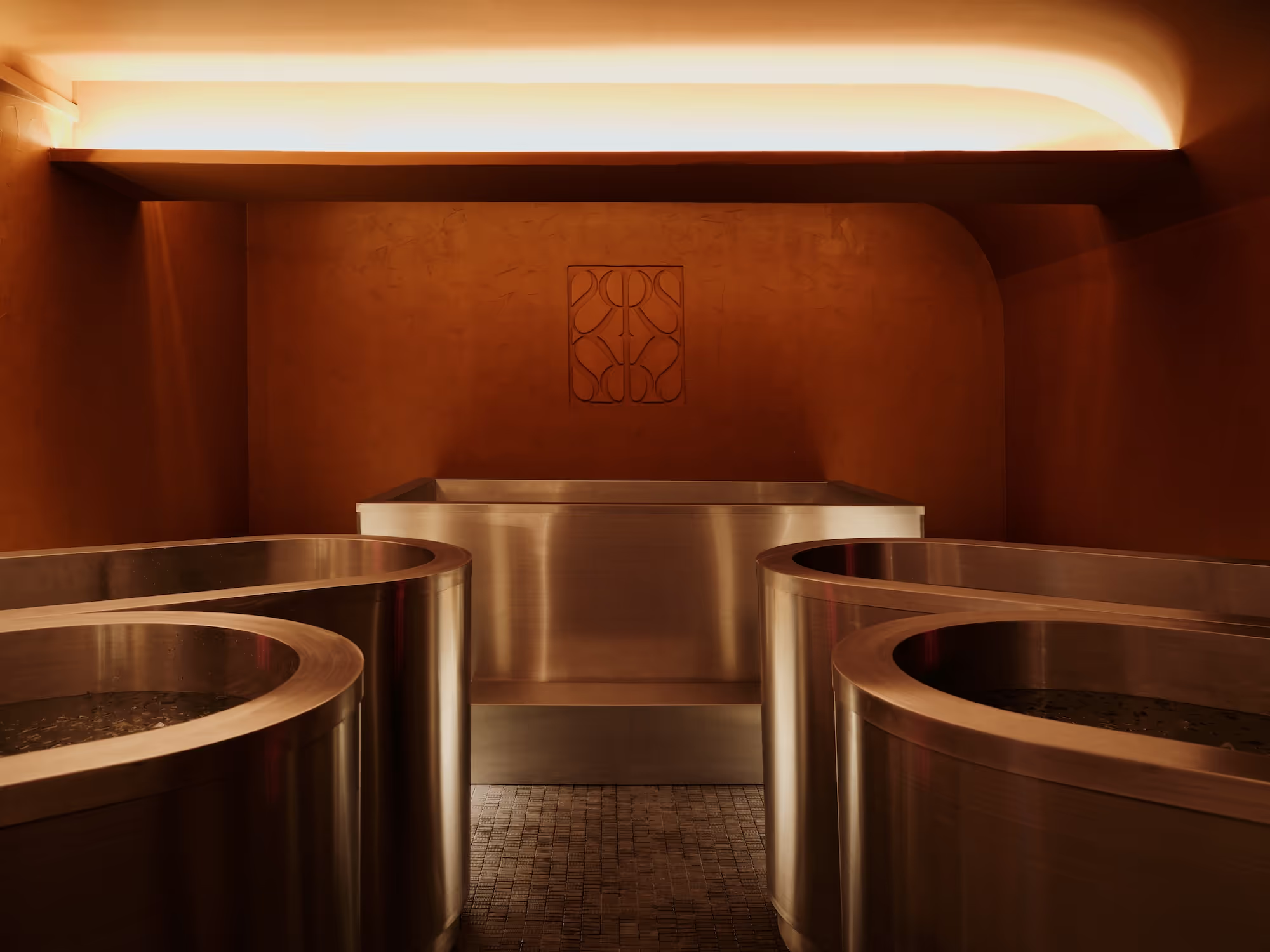
Our cold plunges in Paris are held between 5 and 10°C and follow the sauna within the same session. The full detail of free and guided rituals is on the sauna and cold plunges in Paris page.
This article is informational and does not replace medical advice.
Discover Sant Roch, sauna & cold plunges in Paris, and build your own ritual in a free or guided session.