80, 85 or 90 degrees: the right temperature has less to do with the number than with humidity, duration and your own experience. Our reference points.
When you first discover the sauna, the question is usually very practical: should you aim for 80°C, 85°C, 90°C, or higher? The answer depends less on a single number than on the balance between temperature, humidity, how long you stay and your own experience. In the Finnish tradition, a cabin commonly sits somewhere between 80 and 100°C. But slightly lower heat can already deliver an intense experience, especially once humidity rises after water is poured on the stones.
At Sant Roch, the goal is not to hold the highest possible temperature. A good sauna should let you let go, breathe normally and stay attentive to what you feel. Performance has no place here: heat is a tool, not a contest.
Around 80°C you are fully inside the world of the traditional sauna. For many people, this range gives a clear, honest heat without the sensation becoming overwhelming straight away. It suits first sessions, slightly longer stays, and anyone who wants to focus on breathing and letting go.
Perception varies a lot with bench height, though: hot air rises, and a few dozen centimetres can noticeably change the intensity you feel. Starting lower and moving up once you feel comfortable is usually smarter than hunting for the hottest seat in the first minute.
Around 85°C the heat becomes more enveloping. Many people associate this temperature with the modern Finnish sauna: high enough to bring on heavy sweating quickly, yet still compatible with controlled cycles. At that point, duration matters as much as temperature.
Hotter is not necessarily better. If you start to feel dizzy, nauseous, unusually short of breath or simply uncomfortable, step out. The marker to watch is the quality of the experience, not the clock.
At 90°C and beyond, the heat becomes very demanding, particularly when a löyly, the water poured over the stones, briefly raises humidity. A regular may enjoy that peak; a beginner has nothing to gain from pushing.
The higher the temperature, the more it makes sense to shorten the stay, hydrate properly and allow a real recovery phase between two cycles. The Cleveland Clinic generally advises keeping sauna sessions relatively short, often around 15 to 20 minutes maximum for continuous exposure, and less for beginners.
Two saunas both reading 85°C can feel completely different. Humidity, ventilation, the thermal mass of the stones, how many people are inside and your position on the benches all change the experience. That is why the displayed temperature should never be read on its own.
For a first stay, start in a moderate zone, let your breathing settle and watch how your body responds. The sauna becomes far more interesting once you learn to read your own sensations rather than chase a number.
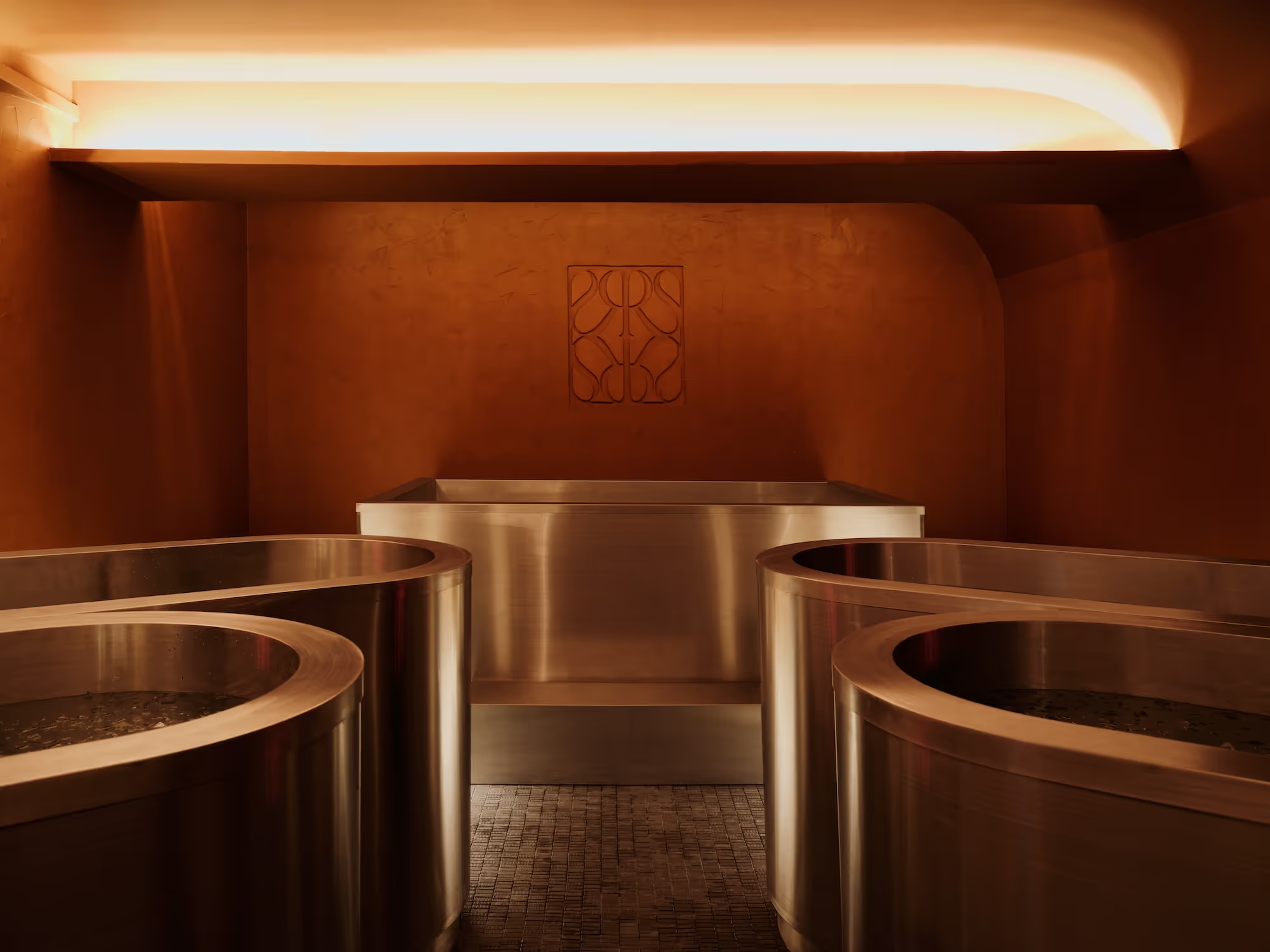
Our sauna in Paris is designed to run on high heat, with session lengths guided by sensation and by the ritual you choose. Alternating with the cold plunges creates a contrast experience that does not require pushing heat to the extreme: what counts is regularity, progression and the quality of the transitions.
To see what a full session looks like, everything is described on the sauna and cold plunges in Paris page.
This article is informational and does not replace medical advice.
Rather feel the difference than read about it? Discover our sauna and cold plunges in Paris, in free practice or as a guided ritual.